
Partner Spotlight: ISAE-SUPERAERO
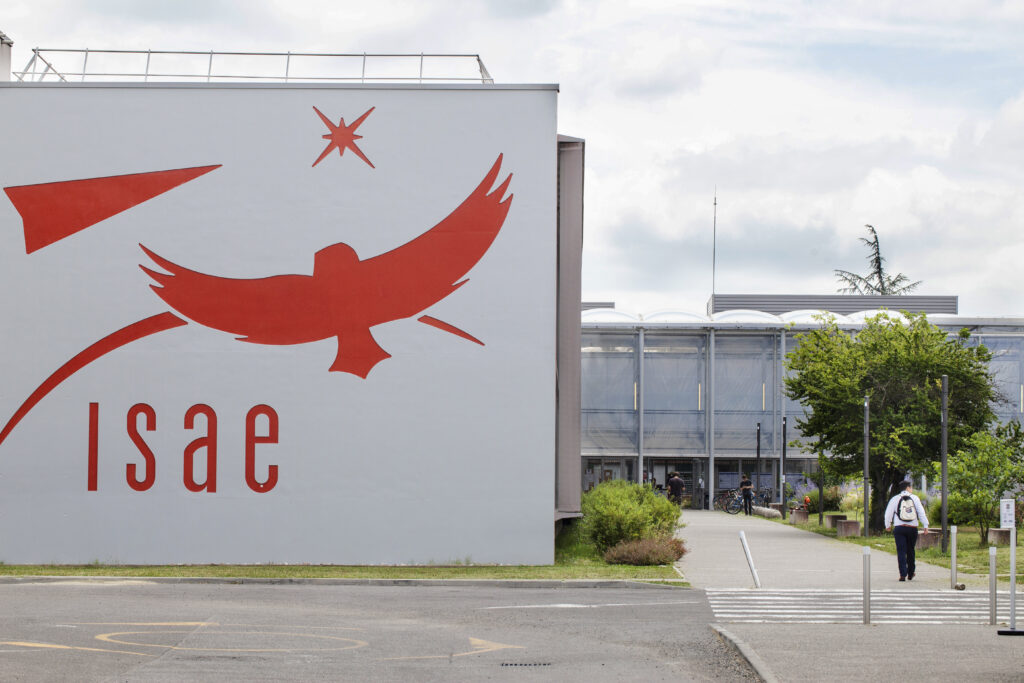
About ISAE-SUPAERO and their role in RESPONSE
For more than a century, ISAE-SUPAERO has supported the growth of the aerospace industry by educating engineers to the highest scientific and technical standards. As pioneers and innovators, our graduates have contributed to major breakthroughs in aeronautics and space, and their recognized excellence strengthens the institute’s international reputation.
Within RESPONSE, ISAE-SUPAERO acts as a technology enabler, focusing on the continuous assessment of a pilot’s functional state during flight, particularly incapacitation risks linked to cognitive degradation. Our approach combines electroencephalography (EEG), which measures electrical brain activity from the scalp, with a novel paradigm based on subtle, coded visual flickers and AI-driven signal analysis to probe cognitive-state changes in real time. This enables more adaptive human–cockpit interaction, helping maintain performance and ultimately improving flight safety.
Current Research: developing the ground-side Concept of Operations
ISAE-SUPAERO are currently running the project second experimental campaign using ISAE-SUPAERO’s PEGASE Flight Simulator. This campaign evaluates an attention-aware cockpit assistance concept with two possible responses to detected attention lapses, either with adaptive automation or an attention-getter alert, and it has three main objectives:
- BCI-based attention monitoring and mitigation (two modes)
The Team is implementing a brain–computer interface (BCI) capable of detecting lapses of attention in real time. When the system identifies degradation, it can respond in one of two ways: adaptive automation, adjusting support to reduce workload and stabilize performance, or attention-getter, designed to prompt the pilot to re-engage before performance deteriorates further. - Efficiency in a realistic, high-workload multi-task flight scenario
The Team is testing the approach in a representative environment involving simultaneous tasks such as navigation, systems management, and radio communications, to quantify its impact on performance and workload under operational conditions. - Acceptability, trust, and Human Factors
the Team assesses whether these attention-triggered interventions (automation or alerting) are perceived as useful, predictable, and non-intrusive, ensuring they do not induce startle, frustration, confusion, or loss of trust.
Beyond attention monitoring, this technology can also serve as a foundation for new hands-free cockpit interaction, enabling pilots to interact with specific cockpit elements through visual attention-based, BCI-supported control when appropriate.
Contributing to Research Challenges and Solutions
RESPONSE aims to deploy adaptive onboard automation based on the pilot’s mental state. Our contribution provides project partners with a reliable physiological foundation to detect and quantify that state.
In particular, accurately identifying different levels of attention decline and fatigue-related incapacitation is essential so that other partners can build robust mitigation strategies. This ensures that assistance is triggered at the right time, in the right way, and with the right level of confidence, ultimately improving safety during flight operations.
Research Challenges and Solutions
RESPONSE includes many challenges, but for ISAE-SUPAERO the main one has been to develop a robust, accurate processing pipeline able to reliably identify attention decline due to mental fatigue.
To address this, we developed an approach based on coded flickering regions of interest (ROIs) integrated into the cockpit display. Each ROI follows a unique temporal code, implemented through an overlay of a textured, grain-based pattern designed to elicit strong and highly stereotyped event-related potentials (ERPs) in the visual cortex.
By reconstructing these codes from EEG responses, we can determine which ROI the user is looking at, enabling gaze-driven interaction. In addition, results from our first experiment showed that the amplitude of these cortical responses decreases as attention declines over time. Tracking these amplitude fluctuations therefore provides a way to detect mental fatigue and adapt automation accordingly.
Impact on the Future of European Aviation
For us, the main expected impact is improved flight safety. Being able to accurately assess a pilot’s mental state, whether in single-pilot or dual-pilot operations, is critical to trigger appropriate support and reduce the risk of human performance degradation during flight.
In that sense, RESPONSE’s ambition to introduce adaptive automation, potentially up to enabling a safe landing when necessary, represents a significant step forward for safer European aviation, by ensuring that assistance is both timely and human-centered



Leave A Comment