
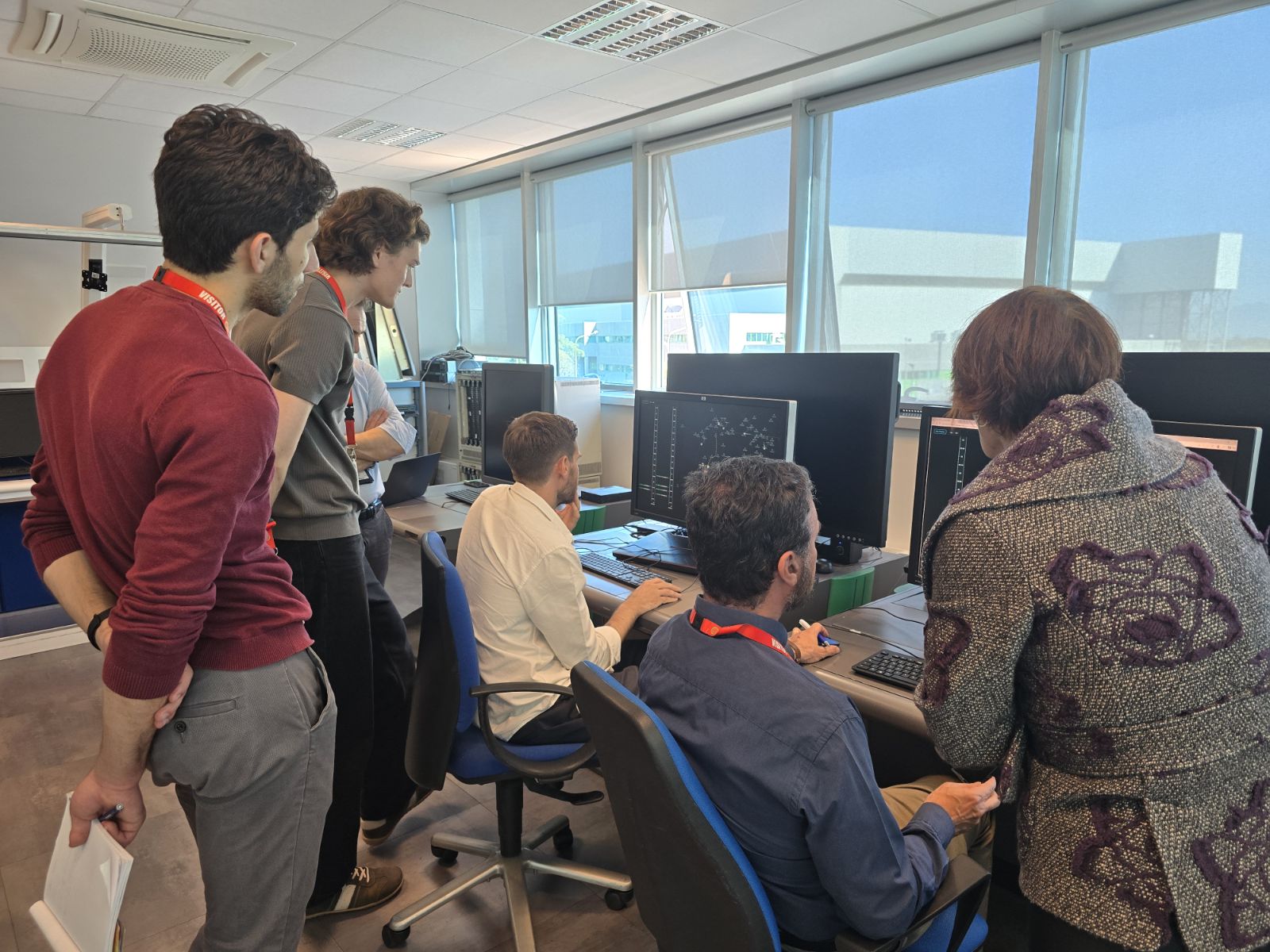
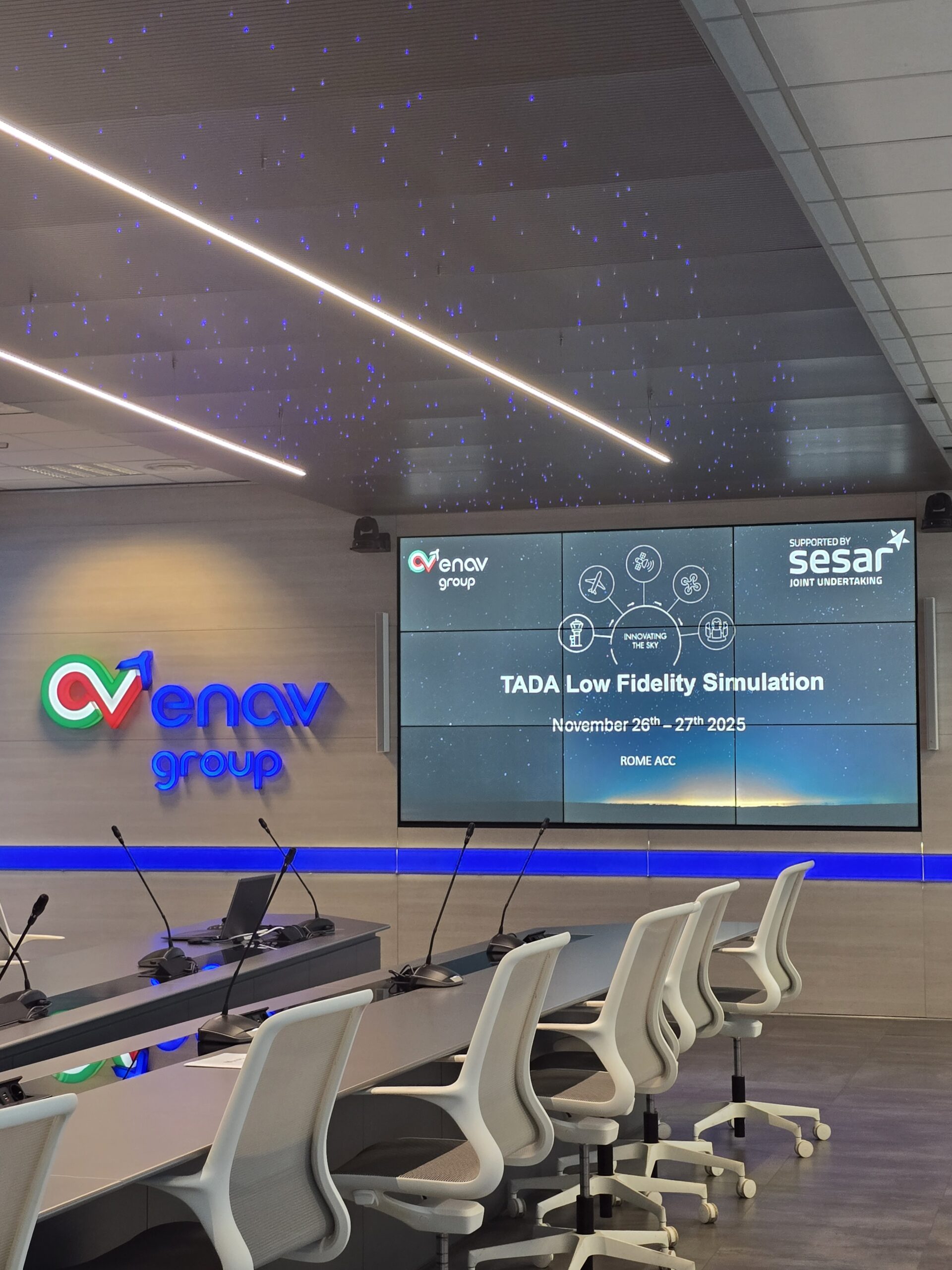
As TADA keeps working to bring smarter, AI-driven support to busy Terminal Manoeuvring Areas (TMAs), the Team is gearing up for one of the project’s most crucial milestones: the Real-Time Simulation (RTS). This round of simulations comes after the first round of validation, the Low-Fidelity Simulation (LFS) in November 2025.
Operational Acceptance Testing – Testing the Environment
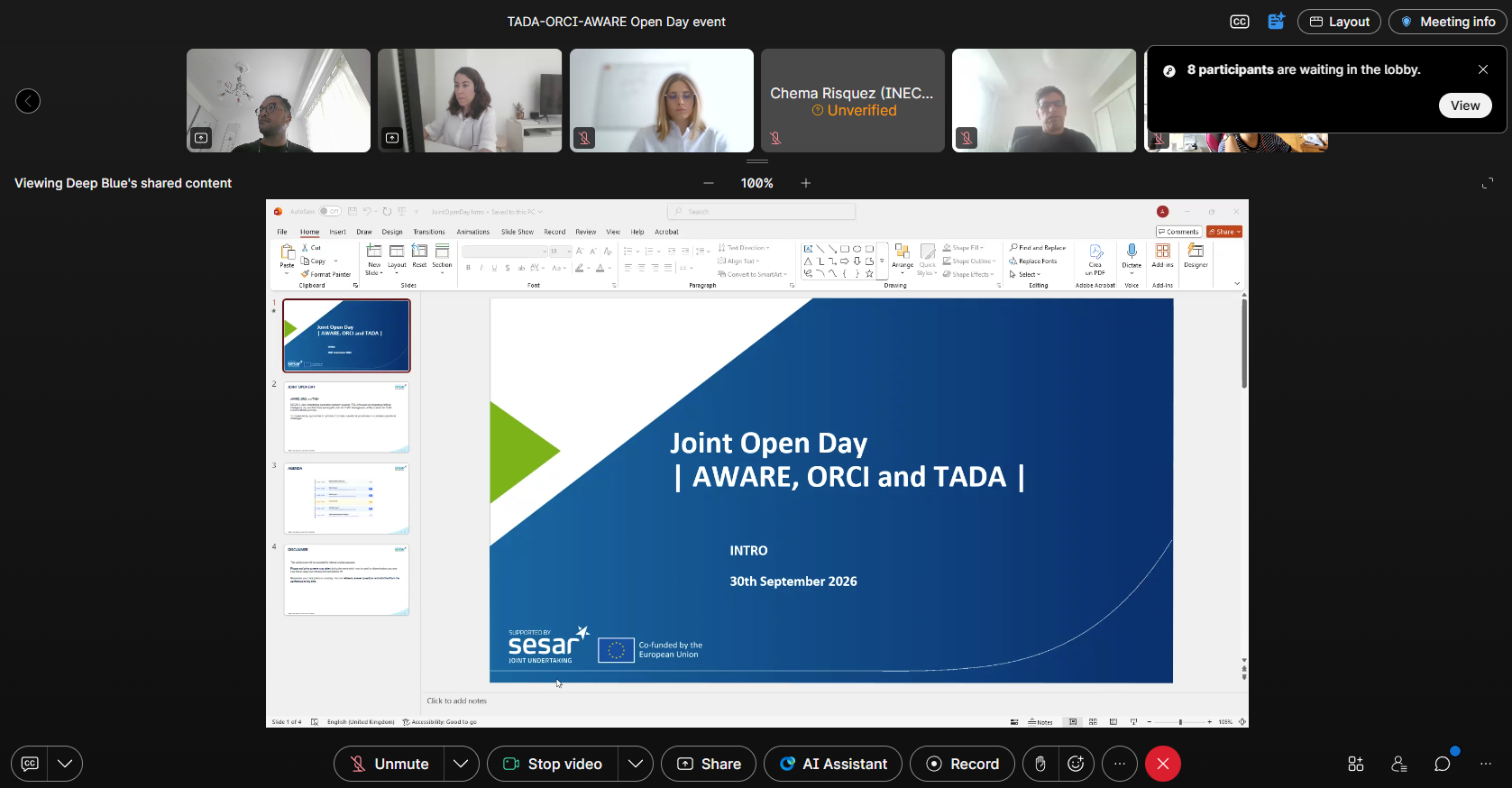
For everything to be ready and in place for the RTS activity, the Team gathered and conducted an Operational Acceptance Testing (OAT). In fact, the OAT was the time and place where the Team could verify that the simulation settings were appropriate and ready for the RTS.
At the OAT, three Air Traffic Controllers (ATCOs) were involved to check the main features of the TADA Digital Assistant. Specifically, they reviewed whether its suggestions were suitable, and the environment and experiment setting were fitting the real scenario of busy European TMAs.
The OAT activity was instrumental to discuss the next steps in preparation for the RTS, while refining the details of the activity.
Real-Time Simulation – Putting the Digital Assistant to the Test
As the final round of validation for the TADA concept, the RTS represents the culmination of our research, design, and development efforts. But what exactly are we testing, and what is its impact on TADA’s final outcome?
The primary goal of the RTS is to test the final version of the TADA prototype with three ATCOs managing sectors, while being supported by TADA Digital Assistant. The aim is to evaluate how helpful TADA could be in supporting human performance, and propose more efficient trajectories that can reduce fuel consumption and CO2 emissions.
We are placing real Air Traffic Controllers in the loop within a representative simulation environment to see exactly how humans and AI team up in complex traffic scenarios.
This isn’t just about making sure the algorithms work. It is about ensuring the technology serves the human operator. Throughout the simulations, we will be closely assessing human performance factors: Explainability, Trust, Usability, and overall ATCO workload. By thoroughly testing the Human-Machine Interaction of the Solution, the Team will guarantee that TADA supports ATCOs, without creating peak workload situations.
Measuring Impact
To understand the true impact of the TADA solution, the Team will gather both qualitative and quantitative data using standard research practices, such as questionnaires, operational observations, and debriefing sessions.
This data will allow the measurement of how the TADA Digital Assistant influences ATCOs performance and overall Operational Safety.
What Happens Next?
The Real-Time Simulation is a crucial stepping stone for TADA. Once the simulations wrap up, the data will be analysed and consolidated into the final Experimental Research Report (ERR). The insights and experience gained from the RTS will be essential to draft the requirements intrumental to integrate these new AI functionalities into real-world, operational ATCO interfaces.
Stay Tuned!
The TADA Real-Time Simulation will be the chance to collect data and operational insights, and the Team will share what we learn. So, be sure to regularly check our website. We will post detailed updates and key takeaways into the results of the RTS soon, so stay tuned!




Leave A Comment