

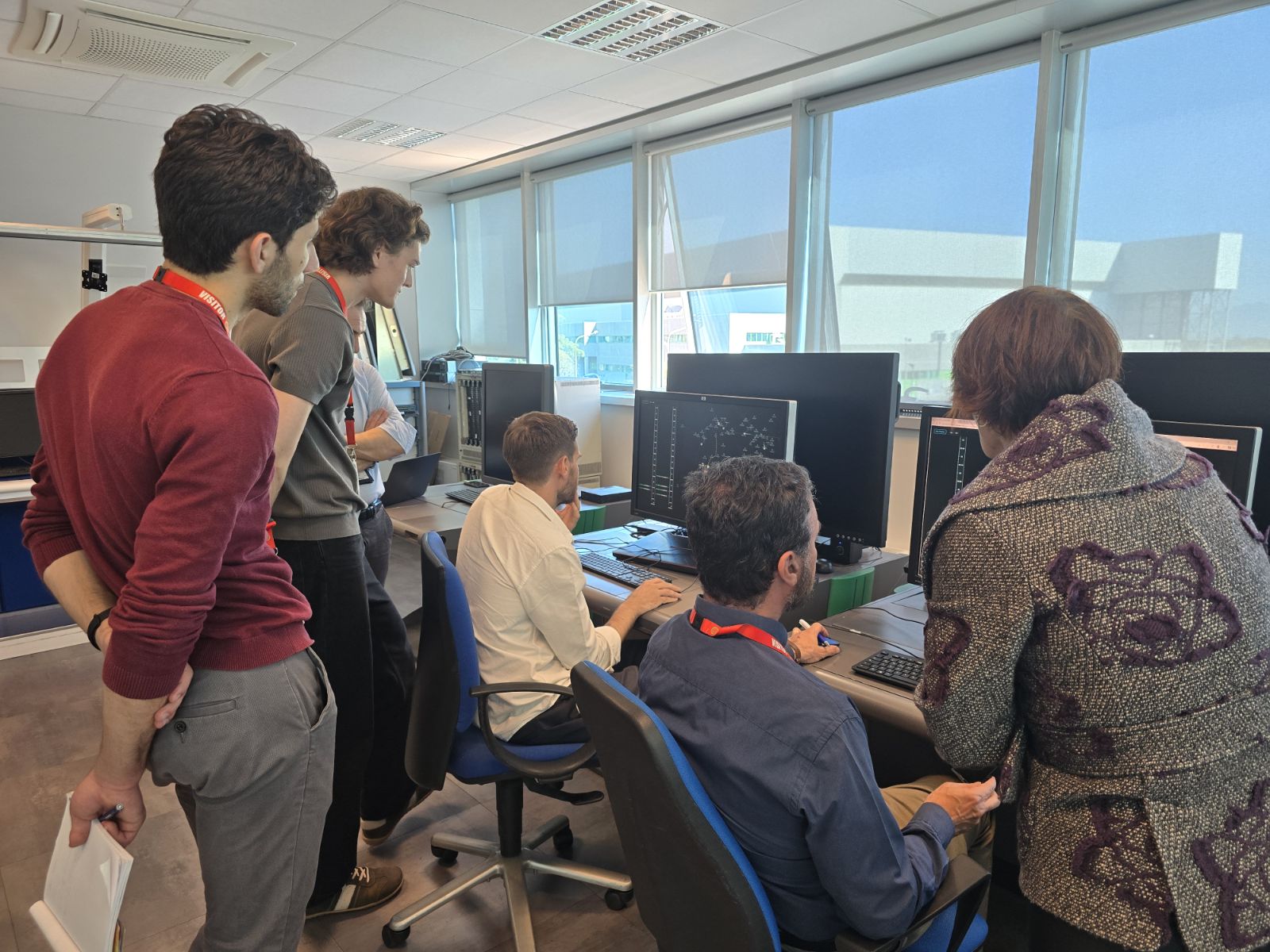
At the end of November, the TADA Team completed its second validation milestone through a Low-Fidelity Simulation conducted with professional Air Traffic Controllers at ENAV’s Ciampino facilities in Rome. The exercise focused on the Human Factors evaluation of the TADA Digital Assistant’s Human–Machine Interface (HMI), assessing the clarity, usability, and integration of system-generated suggestions and alerts to support effective decision-making. Also, the Team discussed preparations of the upcoming Real-Time Simulation in the first half of 2026.
During the last week of November, from the 26th to 27th, the TADA Team reached an important milestone thanks to the successful execution of its second validation exercise. This exercise consisted in a Low-Fidelity Simulation (LFS) focusing on the Human-Machine Interface. The LFS validation is crucial for the development of this Digital Assistant.
Low-Fidelity Simulation Validation in Ciampino – Highlights
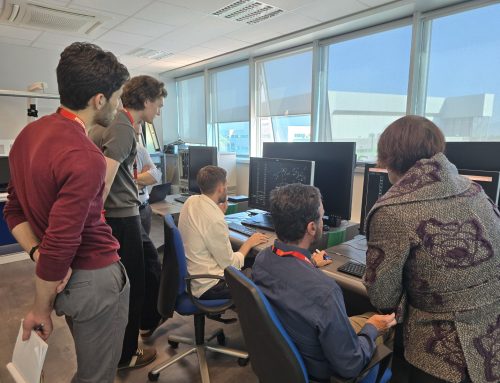
The Team gathered at the ENAV (the Italian Air Navigation Services Provider) facilities in Ciampino, Rome. The validation involved 5 experienced Air Traffic Controllers, who were able to try out TADA mock-up while providing feedback about the TADA suggestions visualisation and alerting logic. More specifically, the objective is to have the TADA suggestions and alerts clearly visible without cluttering the ATCOs’ screen.
This exercise happens on Month 15 of the 30 month-long project that is being developed by six partners: INGENAV (Spain) as Project Coordinator, ENAV (Italy), ; Deep Blue (Italy), Frequentis Orthagon (Germany), MONAD (Finland) and the Institute of Aerospace Technologies (IAT) at the University of Malta;
What comes next: Real-Time Simulation Validation
Now, the TADA Team will focus on the compilation and analysis of the results of this validation, the ongoing development of the AI algorithms that will generate the support to decision making and on the preparation of final validation exercise, the Real-Time Simulation (RTS), which will take place during the 2nd half of April 2026.
For further information about TADA, follow TADA´s LinkedIn page. Stay tuned with us to learn more not only on digital Air Traffic Management, but also the latest trends and innovation in the aviation sector.
Authors: Max Bezzina (INGENAV), Ginevra Fedrizzi, Alessandro Tedeschi Gallo (Deep Blue)





Leave A Comment