
In recent years, Air Traffic in Europe has been steadily increasing, and with it comes a growing challenge. How do we manage inbound flights at busy airports in a way that is efficient, predictable, and sustainable?
This is the core question behind TADA.
TADA is developing advanced decision-support tools designed to improve the management of arriving aircraft at busy Terminal Manoeuvring Areas (TMAs). Today, inbound traffic sequencing relies heavily on tactical decision-making by Air Traffic Controllers (ATCOs), supported by existing Arrival Management (AMAN) systems. While these systems are effective, they operate within constraints that limit how early and how collaboratively decisions can be optimised.
Specifically, TADA aims to move towards a more dynamic, trajectory-based, and data-informed approach to arrival management. By integrating predictive capabilities and enhanced coordination mechanisms, TADA wants to support ATCOs and operational stakeholders with better tools for sequencing, spacing, and flow management. Specifically, it will do this without replacing the human decision-maker at the centre of operations. In the TADA Teaser video, the concept is explained in a simple manner, showing how inbound flights are managed now, compared to how it would work if the TADA Digital Assistant were integrated in the system.
In short, TADA is about smarter support for complex arrival environments.
The Low-Fidelity Simulation (LFS) – Why and How We Tested the Concept
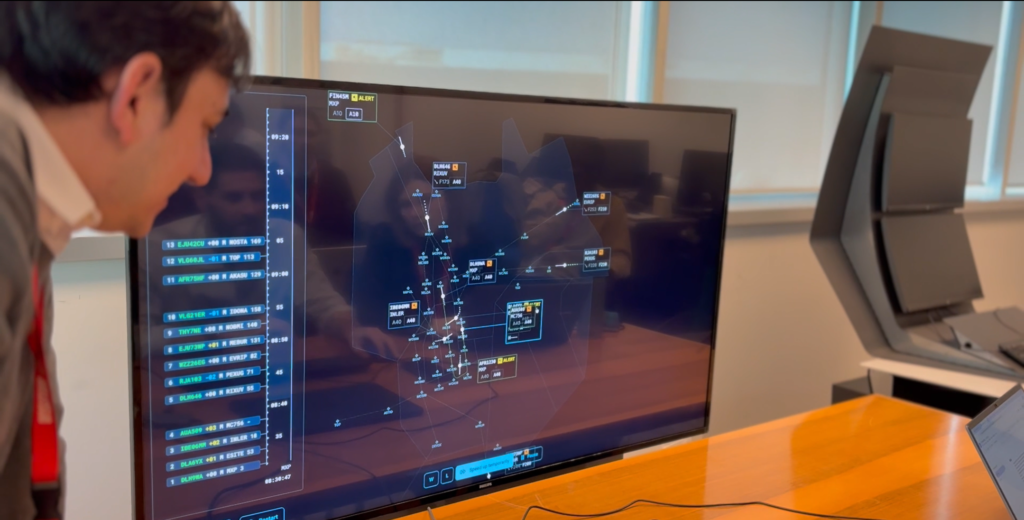
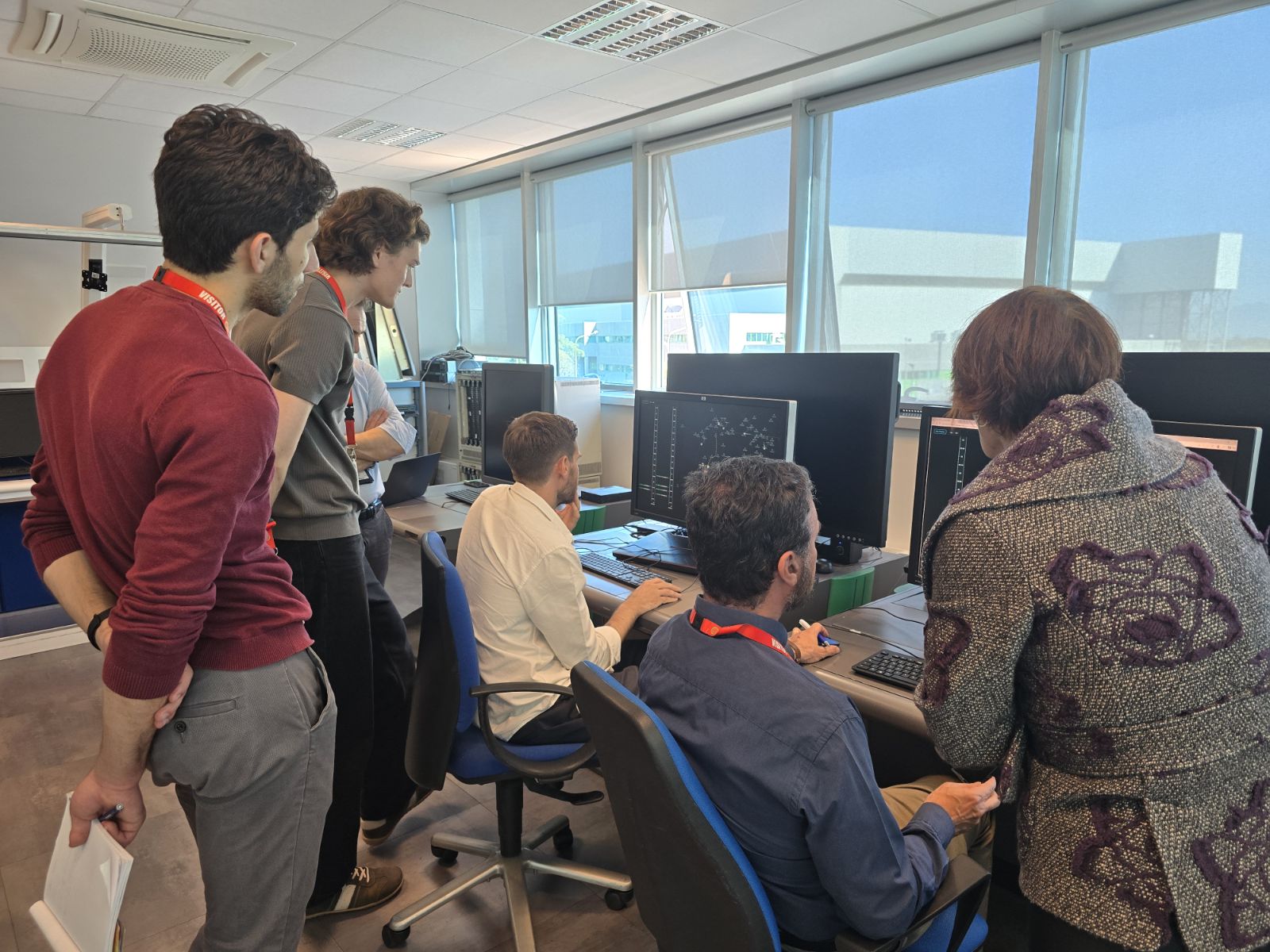
ATCOs testing the TADA Solution during the LFS meeting.
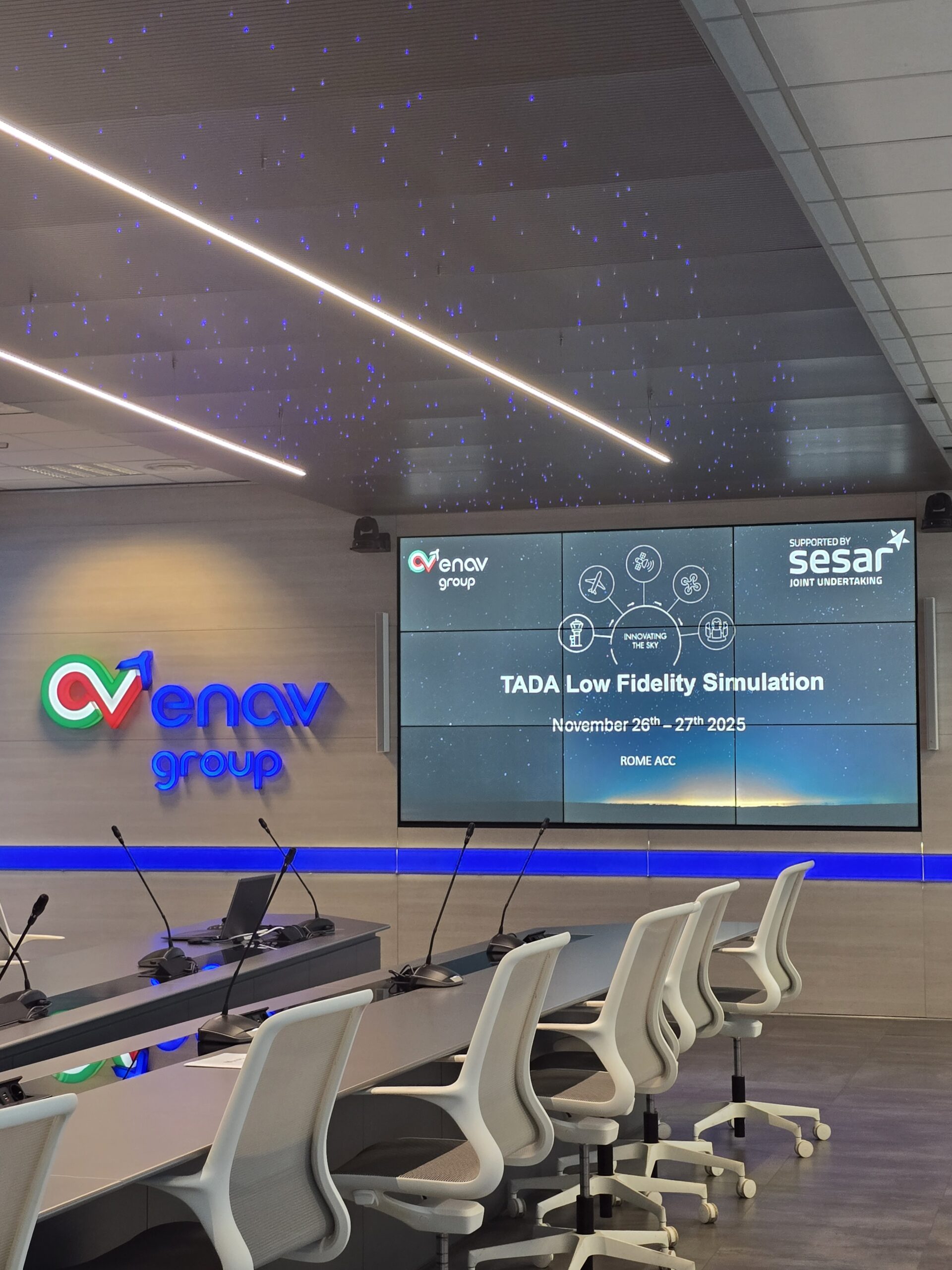
Last November, the TADA consortium conducted an important milestone activity: a Low-Fidelity Simulation (LFS). The LFS was held at the partner ENAV premises in Rome ACC.
But what exactly does that mean and what does it entail?
A Low-Fidelity Simulation is an early-stage experimental setup used to test concepts before investing in fully operational or high-fidelity environments. It allows researchers and operational experts to explore system behaviour, human interaction, and procedural implications in a controlled setting.
The objective of the TADA LFS was to better understand:
- How TADA-supported arrival management performs in realistic traffic scenarios,
- How controllers interact with enhanced decision-support tools,
- How the proposed concept affects sequencing strategies and workload
- What procedural adjustments may be required for future implementation
The simulation environment replicated inbound traffic to a busy airport configuration. Rather than focusing solely on system performance, the LFS adopted a Human-in-the-Loop approach. Specifically, participants (5 Air Traffic Controllers) were asked to manage arrival flows under different scenarios. The exercise compared baseline operational practices with scenarios where TADA-enabled functionalities were introduced.
The Human-in-the-Loop approach is crucial here: TADA is not about automation replacing expertise, but about supporting it. Observing how users interact with new tools allow experts to shape a tool that meets the real operational needs of controllers.
Throughout the sessions, qualitative feedback and operational observations were collected to assess usability, operational feasibility, and overall concept robustness.
Key Takeaways: What We Learned
The Low-Fidelity Simulation provided valuable early insights into the TADA concept.
First, it confirmed that enhanced decision-support mechanisms can positively influence arrival sequencing strategies. Second, the exercise highlighted the importance of Interface Design and information presentation. Even powerful tools must remain intuitive and aligned with controller workflows. The simulation helped identify areas where clarity, timing of information, and integration with existing practices can be further refined.
Third, the results reinforced a central principle of TADA: technological innovation must go hand in hand with operational acceptability. The feedback collected during the LFS ensures that future development stages remain grounded in real-world operational needs.
Finally, the LFS demonstrated that early-stage simulations are essential stepping stones. By validating assumptions, identifying improvement areas, and aligning stakeholders, TADA is progressively moving from concept to practical applicability.
Looking Ahead – What’s next?
The Low-Fidelity Simulation was not the end goal, but a crucial learning phase. The insights gathered will now feed into further development, refinement, and future testing activities. As TADA continues to evolve, the project remains committed to delivering a solution that enhances arrival management performance while keeping human expertise at its core.
The future of air traffic management is not just about smarter systems, but also about smarter collaboration between people and technology.
Follow TADA on LinkedIn to stay updated on our activities, but also on news about Air Traffic Management and Digital Technology in Aviation.







Leave A Comment